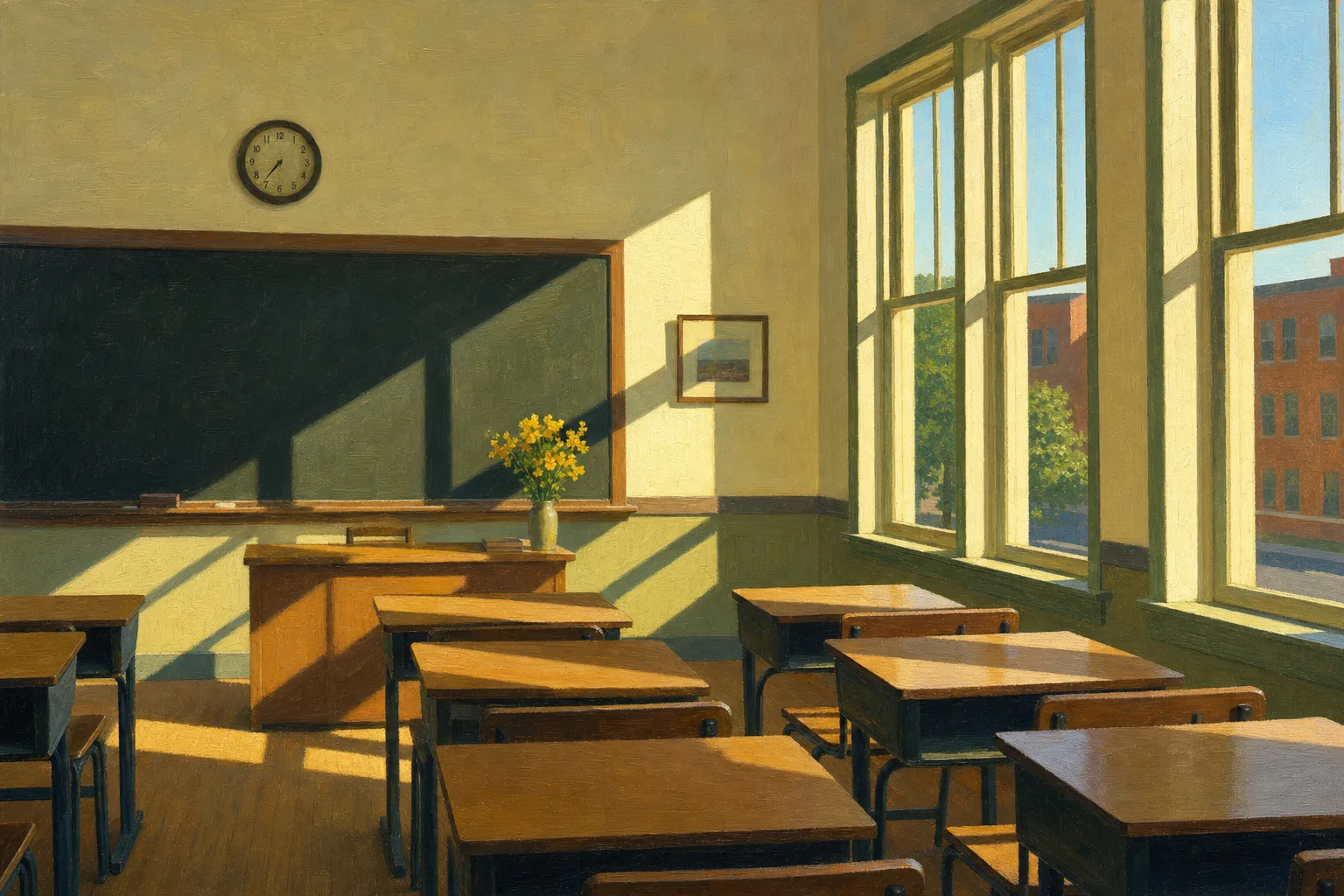
Taking Notes in English Class: A Student Guide
How to take notes from the board, from discussion, and from reading, including the Cornell method and a claim-evidence-question chart, and how to turn notes into an essay.
Download the PDFEvery free PDF on this site, gathered on one page: 28 guides, handouts, and studies for student writers, teachers, and readers. Open any of them and download it—no account and no sign-up.
Core references for any English or writing class, from note-taking to the vocabulary of craft.
How to take notes from the board, from discussion, and from reading, including the Cornell method and a claim-evidence-question chart, and how to turn notes into an essay.
Download the PDFNearly two hundred terms in plain language, from allegory to zeugma: the vocabulary of fiction, poetry, drama, the essay, literary history, and the writer’s trade.
Download the PDFA student reference for the poetry unit, defining each term briefly and illustrating it, wherever possible, with a line from Bishop, Frost, Williams, or Oliver.
Download the PDFWhat to send, where to send it, and how to prepare work for editors.
A handbook for the poet preparing to send work out: curated markets, how to assemble a submission packet, industry databases, and a glossary of literary and publishing terms.
Download the PDFMarket, length, craft, and plotting for the literary fantasy novel, with a table of novel lengths across the major genres, a model query letter with annotations, and a final readiness checklist.
Download the PDFA submission guide for nonfiction writers: how to revise one essay on your own, check its ethics, choose venues, and send it to magazines and journals.
Download the PDFA venue chart for every essay in the nonfiction course, with what to change for each venue, how to submit, and sample letters.
Download the PDFStudent handouts from the ten-session creative-writing course. Each gathers a session’s main points, readings, in-class practice, discussion questions, homework, and a worksheet.
Select a handout to open it as a PDF.
Student guides from the in-person nonfiction course on writing about a building and the people in it.
The shape of a twelve-session nonfiction course: four units, the session-by-session plan, the textbook, and the principles for writing about neighbors.
Download the PDFA reading companion on writing the life of a building: eight nonfiction books, one short-form companion, and nine adaptable narrative blueprints.
Download the PDFA plain-language form for anyone who agrees to be interviewed, quoted, or written about, recording exactly what each person permits.
Download the PDFTypeset studies of the fiction and poetry, with companions for classrooms and reading groups.
A two-page handout naming six recurring features of the work, from plain diction to elegy without theatrics, for quick classroom use.
Download the PDFDiscussion questions and a critical essay on five readings, with a reading map of the full essay archive.
Download the PDFThe story read against the dogma of the Assumption—a model of close, doctrinally literate literary interpretation.
Download the PDFNarrative style in the short fiction: the child’s sensory filter, the adult consciousness that shapes it, and the mechanics of dialogue.
Download the PDFThe artistic creed—writing from mercy rather than judgment, each story a small act of faith.
Download the PDFA study of the short-story collection—mercy as its governing ethic, carried by gesture rather than argued onto the page.
Download the PDFThe full concordance of religious allusion across the fiction and poetry—the recurring images, prayers, and readings in one place.
Download the PDFAll one hundred and thirty-nine paintings that accompany this site, arranged in seven chapters, each with its note and the pages where it hangs.
Download the PDFAlso Available
Additional guides, workbooks, and teaching units are for sale in the Store.
Visit the Store