I have said before that teaching can feel like communion — that a roomful of unconvinced teenagers and one exhausted teacher, meeting honestly for fifty minutes, can take on a seriousness not unlike a sacrament. I have come to believe something similar may be true of writing itself, and I only ever discovered it backwards, sentence by sentence, the way a person discovers most things they already half-believed.
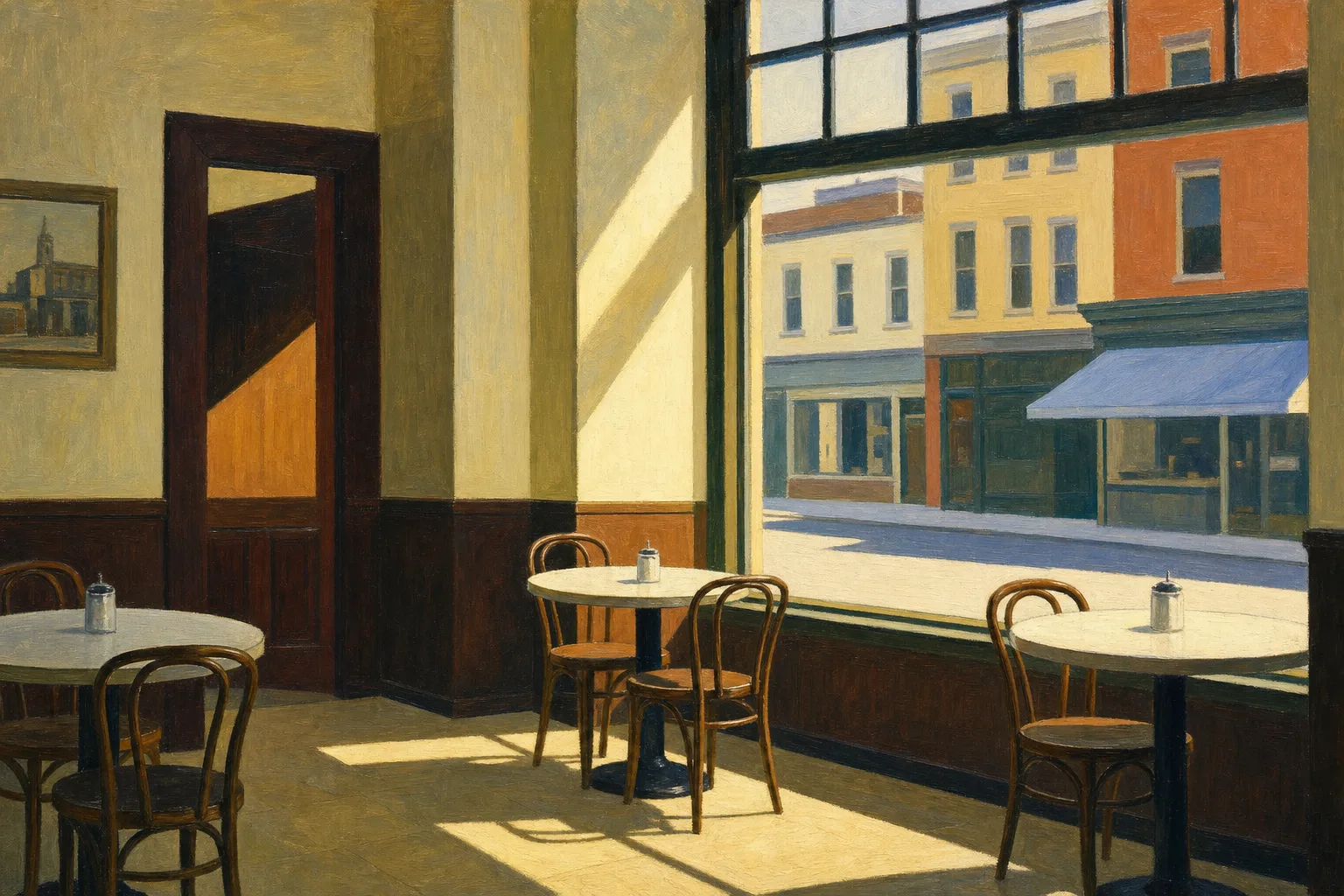
A sentence, when it is working, is not a message sent from a writer who already knows something to a reader who does not. It is closer to a shared table. I sit down not entirely certain what I mean, and the sentence, if I am patient enough with it, tells me — the way a good conversation tells both people something neither of them arrived already knowing. That is the first communion: between the writer and the page, two parties neither of whom fully controls what gets said.
The second is between the writer and the subject — and here I mean subject in the oldest sense, the person or memory or ordinary object being written about. I cannot write about a grandmother anointing a bald scalp with tanning oil, or a mother’s calloused heel, or a housedress with roses on it, without in some sense sitting with that person again, at that table, in that weather. Writing does not preserve the dead so much as it reopens a chair for them. Every essay, every poem about a person now gone is, whether I announce it or not, an act of company kept past the point company should be possible.
My family members are my prayers. I wrote that once and meant it more literally than the sentence lets on. To write about a person with enough attention to get their gestures right — the exact word they used, the exact slant of light in the kitchen when they said it — is to hold them in mind the way a prayer holds its subject in mind: not to fix them, not to improve them, only to keep them present a little longer than memory alone would manage.
The third communion is the one I have the least control over and perhaps trust most: the one between the finished page and a reader I will likely never meet. A poem written out of one family’s grief may become, on a stranger’s late-night reading, a poem about their own. I do not think this is a failure of the poem’s specificity. It is one reason to write something down rather than simply feel it privately — an offer of company, extended blind, across however many years and rooms the page happens to travel through. A writer who finishes a book alone at a desk at midnight can only hope that a reader may later find something of use in it.
None of this requires the reader to share my faith, and very little of it announces itself as faith at all. It looks, on the page, like craft: revision, patience, the refusal to look away from an ordinary detail until it begins to disclose more of itself. Craft, practiced with patience, need not be separate from communion. It can be one way of approaching it. The sacred, if it appears at all, may emerge through attention to the shabby, the overlooked, and the nearly forgotten rather than through declaration alone.
This is why I no longer think of writing as expression, a word that suggests something already complete inside the writer, waiting only to be let out. I think of it as a place set at a table — for the subject, for the reader, for whichever version of myself will need this sentence back someday and will not remember writing it. Teaching was the pond I said I bathed in each morning. Writing may be another part of the same current, with more uncertain room for connection.