An Essay · On the Poetry of Crossings
The Unspoken Elegy
Objective correlative and the grief-work of Crossings—how a folded robe, a photograph on a table, and a shattered print of The Last Supper carry loss that the poems never once name outright.
Listen while you read
J. S. Bach, Goldberg Variations, Variatio 25. Kimiko Ishizaka, piano. Public-domain recording, Internet Archive.
Contents
I. The Word Grief Never Appears
Search Crossings for its own vocabulary of mourning and the search comes back nearly empty. The collection is largely concerned with death: a father’s decline in a hospital room, a grandfather’s emigration and death, a father-in-law’s death on an ordinary morning. Yet words such as grief, loss, devastated, and heartbroken do not appear in the poems this essay examines. What appears instead is a robe, folded; a photograph, framed; a print, shattered on a floor. The absence is the method. It lets spare, often flat statements carry emotion without naming it.
Criticism has a name for the method: T. S. Eliot’s objective correlative, the idea that emotion in art must be conveyed through a specific object or chain of events rather than asserted.1 Invoking Eliot, though, risks making the technique sound cooler than it feels on the page. In Crossings the object is never merely a symbol chosen from outside to represent grief. It is evidence the poem has witnessed, something the speaker touched, folded, or found broken, and the poem’s authority comes from how exactly it was witnessed, not from any commentary laid over it. The rest of this essay follows that evidence outward: from single objects, to the order in which the poems set them, to the voice in which the poems address the people the objects belonged to.
II. Objects That Hold the Feeling

“Copacetic” opens the book with a word borrowed from the speaker’s father, a Marine who picked it up in Korea: “‘Everything copacetic?’ he says.”2 The poem’s subject is a hospital deathwatch, but it never says so. It reports instead. The father refuses Jell-O from a spoon, sleeps through most of a visit, grows agitated one night with “something about a trip,” and near the end stands at a window in “the robe my sister said / brought out the blue in his eyes.” When the son repeats the father’s question back to him, the answer breaks the euphemism that has organized the whole poem: “It was tough,” he says. It is the one moment where the family’s inherited vocabulary of composure fails and something plainer gets through. The poem could have ended on that admission. Instead it ends four lines later, on the object: “By dawn, he’d gone. / His robe, folded, / on the table by the door.” Nothing states that the father has died. “He’d gone” carries the fact, and the folded robe carries what remains unsaid. Folding a robe is a small act of tidying. Read after the poem’s accumulated detail, it becomes the last domestic gesture available to a man who can perform no other kind of care, and the sign of a body no longer in the room to wear it. The word grief would explain the ending. The robe leaves the reader to feel it.
“The Crosswalk” performs the same maneuver with a photograph and a sharper irony. A sibling claims a memory that belongs to the speaker:
I heard you say,“Remember when Danny and I built the shed?”But it wasn’t my brother who cut woodand hammered nails with you.3
Rather than argue, the speaker retreats to a memory no one else can claim: “your help knotting my tie. / We looked in the mirror. / My face reflected in yours.” The poem’s last image gathers past and present into one picture: “It was on the table by your casket. / Your hands on my shoulders. / One moment, framed.” Set apart on its own line, “Your hands on my shoulders” lets a tactile detail stand without gloss. “One moment, framed” closes on a double sense: framed as photographed, and framed as fixed for good, the only tense left to a relationship that has ended.

Some objects outlive a generation. In “The Teapot” the speaker’s mother asks for a yellow, gold-trimmed teapot that was “promised” to him “long ago,” a promise he can no more locate than the object: “I searched cabinets, closets, every shelf—/ never found that gold-trimmed porcelain.”4 Almost incidentally, the poem rebuilds a lost Christmas around the missing pot: siblings gathered, a Streisand album, “Nanna’s Irish prayer—/ ‘thy gifts’—received.” Years later the teapot turns up “in an upstairs room,” and the last line makes an exact pun: “Memories—‘these thy gifts.’” A grace said over food becomes a grace said over memory. The teapot is never explained as a symbol of the dead it recalls. It is simply found, and the finding does the remembering.
“Shoes” carries the transfer across three generations in one article of clothing. The speaker fits an aging woman’s feet into her “favorite pair of Dr. Scholl’s,” and she is embarrassed by her “crooked” toes, which she traces to her own mother’s poverty: “My mother cleaned houses for the rich . . . We had to wear the shoes she brought home. / They were often small. / That’s why they look this way.”5 The speaker’s imagination reaches back to a great-grandmother he never met, “hugging a bag of discarded shoes / as she walked down the street, / shoulders curled in the wind,” her own shoes “worn and broken, / like the skin on her red, cracked hands.” The chain of scarcity resolves into something nearer grace than grievance: imagined giving away shoes she can barely spare, the great-grandmother would be
tearybut smiling,relieved she had somethingto give.
Inherited poverty and inherited generosity are never stated as a theme. The shoes, small and ill-fitting across three lifetimes, state it.
“Fragility” traces the restraint itself to its source. It sets a modern meeting room, where “a question asked / hurts someone’s feelings,” against the speaker’s grandmother:
My grandmother livedin a dirt-floor house,walked a mile to a well,slept in a bed with two siblingsand a few fire-warmed bricks.Never once said,“My feelings are hurt,”wouldn’t understandthe wordfragility.6
Her walk to the well, made “most mornings” after kneeling to say her rosary, ends not in complaint but in blessing. She
gingerly avoided stonesthat stabbed her feet,stones that bruised—still, she whisperedblessingsinto the early light.
The poem suggests that the book’s refusal to name grief is not a technique imposed on emotional material from outside. It continues a family ethic in which suffering is carried physically, in a pail and on bruised feet, and answered with a whispered blessing. The poems do what the grandmother did. They walk the mile, and they do not say the walking hurt.

“Last Supper” brings the method to its most literal object. A man wakes to a whimpering dog and a bleeding arm, and then the call comes: “‘My father’s dead. / Can you shine my shoes?’”7 The request is almost comically practical, and the poem leaves the incongruity to do its own work. Then:
In the living room,the cheap print ofThe Last Supperlay on the floorits frame splintered.
The word cheap matters as much as the image. This is a mass-produced devotional print of the kind found in countless working-class Catholic homes, and its ordinariness lets it carry sacred weight without the poem reaching for any. The fall of the print is never connected to the death. The two simply share a room and an hour, and the reader makes the connection as the family would have, wordlessly. The poem returns to the print at the end:
At home, he kneltbeside the shattered print.His shoulders drooped,his back shook.
The body’s grief is present at last, but it arrives in a man kneeling before a broken object, not in an abstract noun. Even at its most direct, the poem needs the artifact to hold the feeling steady.
III. The Published Twenty-Poem Sequence

Read one at a time, the objects are separate acts of withholding. Read in order, they become a journey. The twenty-poem sequence of Crossings: Selected Poems, from “A Prayer” through “Leaves,” is neither alphabetical nor random. It moves from inheritance and arrival, through the losses of a single extended family, to a closing movement that sets new life against unresolved grief. The order does something a thematic reading cannot. It treats grief as a crossing that is never completed, not a wound that closes.
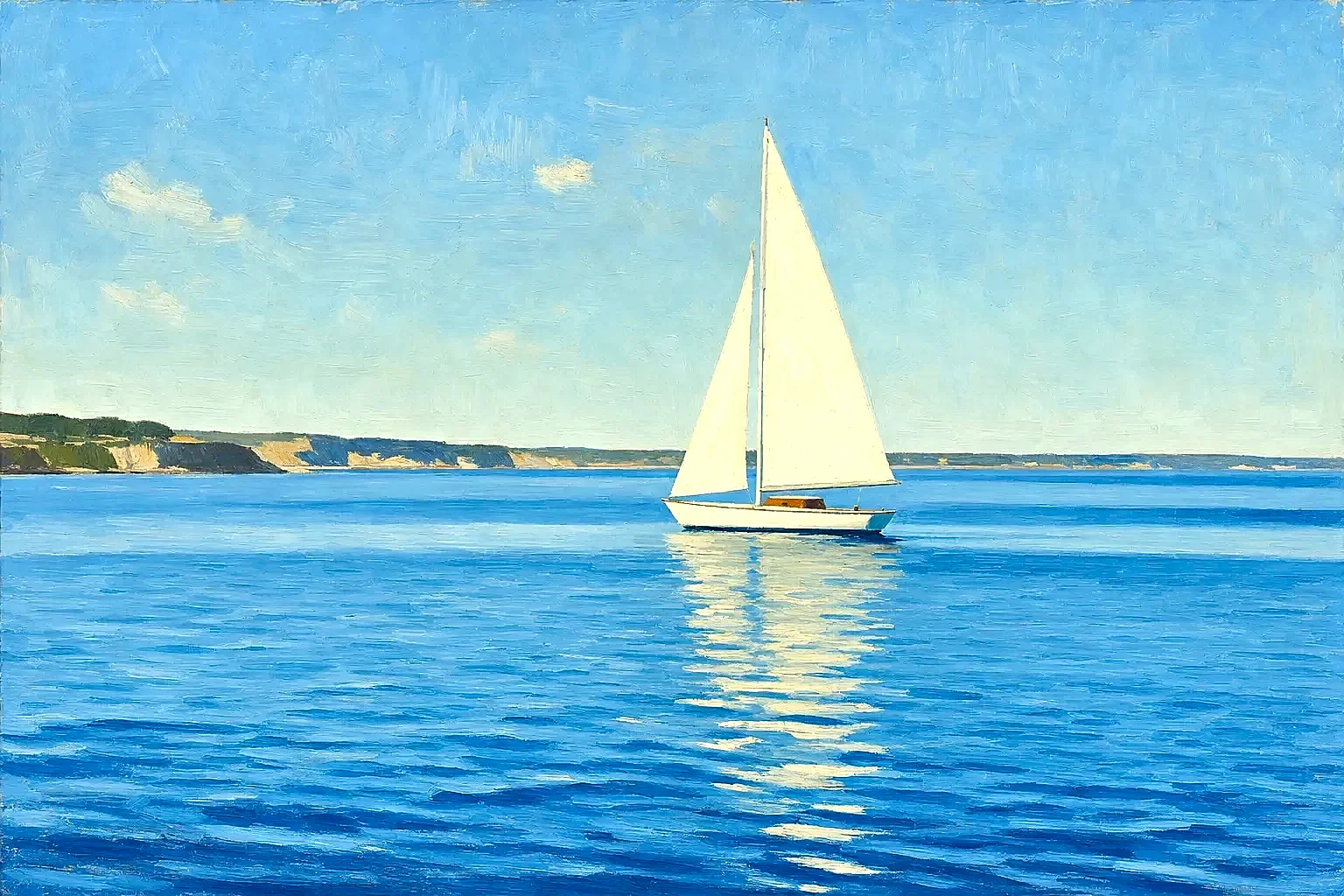
The book opens at the water’s edge. Its second poem, “Dark City,” makes the title literal. A grandfather walks from “Athlone on the Shannon River, / dead center of Ireland” to Southampton, where he “boarded the Adriatic, / a name that means, ’dark city.’”8 He carries “a canvas sack, your mother’s Bible,” and “Hardly any money.” Before that, the poem has given the speaker’s single memory of him, from the age of two, “in the dark hallway of your Boston home,” and after it the poem brings the grown speaker, “close to your age now,” to the abandoned homestead in Ireland: “I press my palm against the homestead wall, / as you touched my head so many years ago. / I see you move from darkness into light.” The title’s darkness resolves into a gesture, not a statement about death or the afterlife: a hand on stone answering a hand on a child’s head decades before. At the front of the book the poem sets the collection’s basic vocabulary: crossing as movement from dark to light, undertaken at cost. Every later crossing (a bath, a plane’s turbulence, a grave) is measured against that founding Atlantic passage, made once, by someone who did not live to see the grandchild writing the poem.
The middle of the book (“The Crosswalk,” “Piano,” “Last Supper,” “She Knelt,” “We’d Scrape the Rocks,” “Shoes,” “Honeymoon”) is organized around a recurring situation instead of a recurring image. An adult attends to the failing body of an elder, and hands do the work love no longer has words for. “Honeymoon” states the pairing of tenderness and time outright. It moves from ointment rubbed into a heel to a photograph of a young couple who “could be my children,” and closes on “the tenderness at the bottom of her sole” and “the aching tenderness of her soul.”9 The pun is the poem’s argument compressed into a homophone: body and spirit tended by the same gesture. “We’d Scrape the Rocks” carries the care into ritual, a grandson called to help lift his grandmother toward her bath, and “Shoes” carries it back a further generation.10 In sequence these poems argue that care in this family is passed on the way the Atlantic crossing was: physically, hand to hand and body to body, with no guarantee that the one receiving it can repay or even understand it at the time.
The sequence sets its two brother elegies side by side. “Brother Mark” ends on a wish to stop time, a refusal to let its moment become past tense. “Brother Mike,” in which a reticent brother answers the speaker’s worry with no advice, only by crossing himself “in the dashboard light,” is followed by poems that carry the grief into estrangement. “Please Call Me” voices a loss with no funeral to mark it and no casket to frame a final image: “I no longer know you . . . I long to hear your voice.”11 Read as a pair, and in their placement, the brother poems distinguish death, which closes on a date, from estrangement, which does not.
The last four poems make the closing movement. “The Nest” ends on imminent birth, a body in a cast recovering while robins hatch outside, and the imagined day “you’ll walk outside again . . . searching the blue, hoping to glimpse a fledgling.”12 “Turbulence” follows with the speaker’s own mortality, a rattling flight read as the human span: “Behind: everything lived. / Ahead: the solid blackness.” “Water” presents the title image at its most desolate, an old man on a dock “reaching for water / that will not rise,” water withheld, not crossed. And “Leaves” ends not in acceptance but with a voice at a graveside: “’We’re done,’ you whisper in my ear . . . You’re no longer here. / I stand and leave.” The final word puns on the title. The noun that names the poem’s central image becomes the verb that ends it, and the book closes on a leave-taking that recalls “Dark City,” another departure from a fixed point toward an unknown elsewhere. Read end to end, Crossings presents crossing as the family’s inherited condition. The grandfather crosses an ocean. The grandchildren cross into caretaking. Brothers cross into death or into silence. The last speaker leaves a grave after a voice tells him the work is “done,” a claim the poem’s tears complicate. To belong to this family, in this book, is to be mid-crossing and never quite arrived.
IV. The Reader as Confessor

There is a third layer, and it concerns who is being spoken to. Many of these poems are addressed to a “you” who is dying, dead, or sealed behind a door. Mulhern’s fiction stages confession between characters who share a scene, as “The Confessor Archetype” shows. These poems do something formally different. They speak directly to the absent person, mid-poem, as though the addressee were briefly present to receive what is said, and they make the reader an accidental witness to words never meant for a general audience. The reader becomes something like a confessor by proxy, present for speech aimed at someone who, in nearly every case, cannot answer.
The grandmother poem sustains the address through its whole grammar. From the first lines it speaks past its occasion, a visit and a bath, to the grandmother herself:
When Mom and I arrived,you hid the donut behind the picture.I stared at an old photograph,gray-yellow as your skin.13
It never refers to her in the third person, even when the speaker is shut out of the room, sent to “Grandpa’s chair” to say prayers while his mother bathes her behind a closed door. The address persists past the point where any literal listening is possible, as far as the bathwater the boy cannot see:
Behind the door,bathwater swayed,Clew Bay in an old white tub,Brigid’s rock gleamedin sour-salted steam.
That is the device’s central paradox. The more intimate the address, the less able the addressee is to receive it, until the “you” is sustained by grammar alone.
The address reaches its limit with the dead. In “The Crosswalk” the “you” corrected over a misremembered shed is the same “you” addressed beside the casket. The poem never shifts into elegiac third person, and living conversation and posthumous address become one unbroken relationship. “Piano” goes further, addressing an act of domestic violence to its perpetrator: “That gray day, you took an axe to the Steinway . . . You shattered the shiny veneer . . . I thought of my mother, / the day she moved out, / how you changed the locks.”14 Here second person does what confession’s ordinary structure cannot. It accuses without requiring the accused to be present, staging a confrontation that could not safely have happened in life. “Brother Mark” turns the address into a refusal to let go.
Your arm on my shoulder,your face orange from flames . . . I loved the circle of flickering flames and logs.Sometimes in the blackness of my room,a fire blazes.I see our faces.Hear our voices.
Then it says outright what the grammar has been doing:
I wish we’d stayed,never stepped into the snowy light.Our time together—perpetually that night.15
The word perpetually does the same work as the second person throughout the book. It turns a single, finished occasion into something ongoing and still addressable.
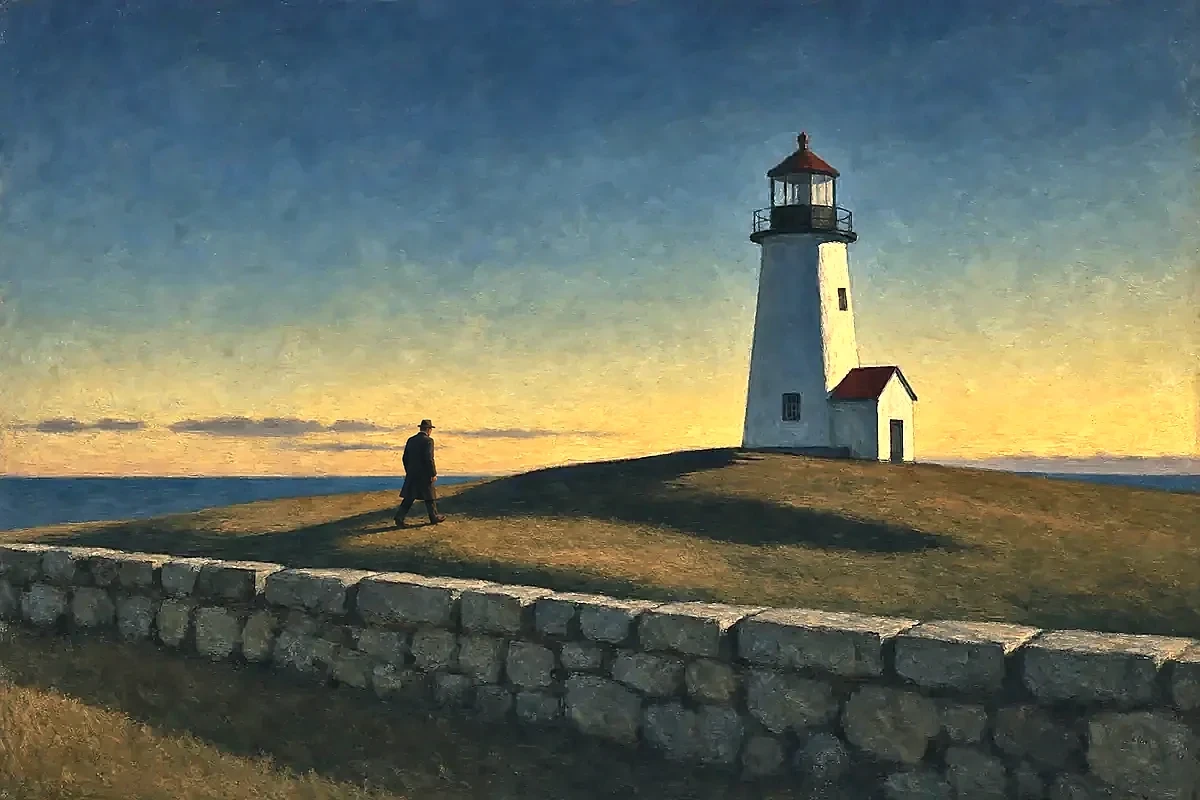
None of these poems announces that it is being overheard, and that is the source of their force. A reader who meets “you hid the donut behind the picture” or “you took an axe to the Steinway” has no grammatical position except that of a third party who happens to be present. It is the position of the boy in “A Bath,” listening through a closed door to sounds he is not meant to interpret, or of the child in “Assumptions,” entrusted with a confession beyond a child’s proper role. The poems do not invite sympathy from outside, as a third-person elegy does. They make the reader present for testimony the speaker needed to say aloud whether or not the “you” could hear it. The reader is asked neither to judge nor to absolve, only to have been there, which is the function the fiction assigns to its child confessors. Being heard, in this imagination, does not strictly require a listener capable of hearing. It requires the act of address, sustained past reasonable hope. The reader, present by accident and asked only to have listened, receives it in the listener’s place.
V. With Heaney in Mind

What do objects, sequence, and address achieve together? Seamus Heaney offers a vocabulary for the answer. In “The Redress of Poetry,” the opening lecture of his 1995 Oxford series, he describes the poetic act as “informed by the idea of counterweighting, of balancing out the forces, of redress—tilting the scales of reality towards some transcendent equilibrium.” Poetry, on this account, does more than describe loss. It answers it, placing “a counter-reality in the scales—a reality which may be only imagined but which nevertheless has weight because it is imagined within the gravitational pull of the actual and can therefore hold its own and balance out against the historical situation.” Its redressing effect “comes from its being a glimpsed alternative, a revelation of potential that is denied or constantly threatened by circumstances.” The comparison is offered with humility. Held in mind, Heaney’s poems show more clearly the direction these poems take.
The clearest point of contact is a refusal to state grief and a trust in the concrete object to carry it. Heaney’s “Mid-Term Break,” the elegy for his four-year-old brother, is the canonical instance. The father’s grief is registered by its inversion, “In the porch I met my father crying—/ He had always taken funerals in his stride—,” the mother’s as sound, “coughed out angry tearless sighs,” and the poem closes on a measurement that does all the feeling: “A four-foot box, a foot for every year.” No line tells the reader how to feel. The box does the telling. In a much smaller way, the folded robe does the work of Heaney’s box. A second point of contact lies in the poems about mothers, where the sacred is found in a household act, not a ceremony. In “Clearances,” while the parish priest goes “hammer and tongs at the prayers for the dying,” the son remembers peeling potatoes with his mother: “Her breath in mine, our fluent dipping knives—/ Never closer the whole rest of our lives.” In Crossings the nearest poem is “Honeymoon,” whose speaker kneels to rub ointment into his mother’s cracked heel and knows, and says, that this is the moment he will return to: “Someday later, / I’ll hold the photo, / remember this night.” “Moving Forward” keeps the mother the same way, in remembered touch:
I’ll feel her fingerssoftly trace my faceand hear her say,“I love you, sweetheart.”
The likeness to “Clearances” is one of subject and gesture only, in a plainer American voice.
Where the poems part from Heaney is the main point of this essay. Heaney’s redress is vertical. “Digging” descends through two generations of manual labor, the father “Stooping in rhythm through potato drills,” the grandfather “going down and down / For the good turf,” before returning to the pen: “Between my finger and my thumb / The squat pen rests. / I’ll dig with it.” Poetry, for Heaney, is excavation, the spade’s downward motion applied to memory. Even the bog poems of North are acts of digging, the poet lowering himself into the earth to retrieve the preserved dead. Mulhern’s redress is horizontal. His ancestors did not stay in the soil. They crossed an ocean, and their descendants inherit not rootedness but distance. The grandfather of “Dark City” labors not by digging but by carrying: “You carried courage, a dream.” When the speaker reaches the homestead he is a pilgrim, not a native:
No one lives in the tiny stone house.Birdsong.Smell of cut grass.Sheep amble through the fields.
He can only visit. The same carrying returns in “A Prayer,” where a great-grandmother, Josephine, walks
past signsthat read “No Irish Need Apply,”her bony hands clutchinga burlap bag of discarded shoesfor her children’s tender feet.
Heaney’s ancestors dig for potatoes and turf. These ancestors carry what others have thrown away, across an ocean and into the next generation, and the poem sets the burlap bag in the scales against the historical situation, “No Irish Need Apply” answered generations later by a poem that will not let the bag be forgotten.
The redress of grief, read this way, has something like a grammar, and it can be spoken along different axes. These poems share some of Heaney’s habits. They make the domestic sacred, they trust the concrete object over the adjective, they find the mother in remembered touch, and they treat the poem as a counterweight against loss. They differ in direction. Heaney digs down into ancestral ground. Crossings crosses back and forth over the water that separates a family from it, toward a home that no longer has anyone in it, and across the threshold between the living and the dead, a passage that never quite completes. The book’s late poem “Water” makes the point in five lines. An old man on a dock bends,
cupping his handstoward the lake below,reaching for waterthat will not rise.16
Every artifact in the book does the same. The robe, the photograph, the teapot, the shoes, the dashboard cross, and the shattered print are each a cupped hand held out toward water that has already receded. Each does what language alone, in these poems, is never trusted to do. It is the unfinished crossing, not the finished dig, that is this book’s subject.
Notes
- 1. T. S. Eliot, “Hamlet and His Problems,” The Sacred Wood: Essays on Poetry and Criticism (1920), the essay in which the term “objective correlative” originates. ↩
- 2. James Mulhern, “Copacetic,” in Crossings (Silver Current Press). ↩
- 3. James Mulhern, “The Crosswalk,” in Crossings (Silver Current Press). ↩
- 4. James Mulhern, “The Teapot,” in Crossings (Silver Current Press). ↩
- 5. James Mulhern, “Shoes,” in Crossings (Silver Current Press). ↩
- 6. James Mulhern, “Fragility,” in Crossings (Silver Current Press). ↩
- 7. James Mulhern, “Last Supper,” in Crossings (Silver Current Press). ↩
- 8. James Mulhern, “Dark City,” in Crossings: Selected Poems (Silver Current Press). ↩
- 9. James Mulhern, “Honeymoon,” in Crossings: Selected Poems (Silver Current Press). ↩
- 10. James Mulhern, “We’d Scrape the Rocks” and “Shoes,” in Crossings: Selected Poems (Silver Current Press). ↩
- 11. James Mulhern, “Brother Mark,” “Brother Mike,” and “Please Call Me,” in Crossings: Selected Poems (Silver Current Press). ↩
- 12. James Mulhern, “The Nest,” “Turbulence,” “Water,” and “Leaves,” in Crossings: Selected Poems (Silver Current Press). ↩
- 13. James Mulhern, “We’d Scrape the Rocks,” in Crossings: Selected Poems (Silver Current Press). ↩
- 14. James Mulhern, “The Crosswalk” and “Piano,” in Crossings: Selected Poems (Silver Current Press). ↩
- 15. James Mulhern, “Brother Mark,” in Crossings: Selected Poems (Silver Current Press). ↩
- 16. James Mulhern, “Water,” in Crossings (Silver Current Press). ↩
Works Quoted
Quotations are drawn from “Copacetic,” “The Crosswalk,” “Brother Mark,” “Dark City,” “Brother Mike,” “The Teapot,” “Shoes,” “Fragility,” “Water,” “Last Supper,” “Honeymoon,” “We’d Scrape the Rocks,” “Please Call Me,” “The Nest,” “Turbulence,” “Leaves,” “Piano,” “Moving Forward,” and “A Prayer,” as published in Crossings: Selected Poems (Silver Current Press, 2026); the fuller manuscript is available as a complete reading text on this site, and from T. S. Eliot’s The Sacred Wood (1920).
Quotations from Heaney are drawn from The Redress of Poetry (Farrar, Straus and Giroux, 1995), 3–4; “Digging” and “Mid-Term Break,” in Death of a Naturalist (Faber and Faber, 1966); and “Clearances,” in The Haw Lantern (Faber and Faber, 1987). These are a reader’s points of comparison.
Related essays on this site: “What Is Laid Down Is Taken Up” follows the recurring images of the poems and fiction as a single system; “The Confessor Archetype” examines the fiction’s scenes of unlicensed confession.
Quotations have been checked word for word against the published texts. Where a connection is inferred, the essay says so.