An Essay · On Narrative Style
The Remembering Voice
Narrative style in the short fiction of James Mulhern—the adult cadence and the child’s uncorrected eye, and the discipline of refusing to explain.
Listen while you read
J. S. Bach, The Well-Tempered Clavier, Book I: Prelude No. 10 in E minor, BWV 855. Kimiko Ishizaka, piano. Public-domain recording, Internet Archive.

I. The Remembering Voice
The dominant mode of James Mulhern’s short fiction is retrospective first person, and its distinguishing feature is a deliberate mismatch between the age of the voice and the age of the eye. The cadence is adult—measured, unhurried, capable of the well-placed lyric sentence. The understanding is frequently that of a child or an adolescent, and the narration declines to correct it. What the young narrator sees is reported with fidelity; what it means is left standing in the room, unclaimed.
The result is a controlled unreliability quite different from the unreliability of deception. Nothing is concealed from the reader that is not also concealed from the speaker. What is missing is interpretation, not information, and it is the reader who closes it. On a second pass the adult reader can see the shape of an event that the narrating child registered only as weather in the house. The mechanics of that gap—and the difference between perception failed and affect withheld—are examined in detail in “Molly Bonamici: A Comprehensive Study.”
Speech reinforces the effect. Boston-Irish Catholic inflection arrives without gloss or apology, in the words people use, not in description. Characters are not introduced; they are overheard into existence. A phrase such as “For Christ’s sake” does duty as ordinary exasperation while retaining, in a Catholic household, the shape of an invocation, and the prose rarely stops to point this out.
II. Sentence Texture
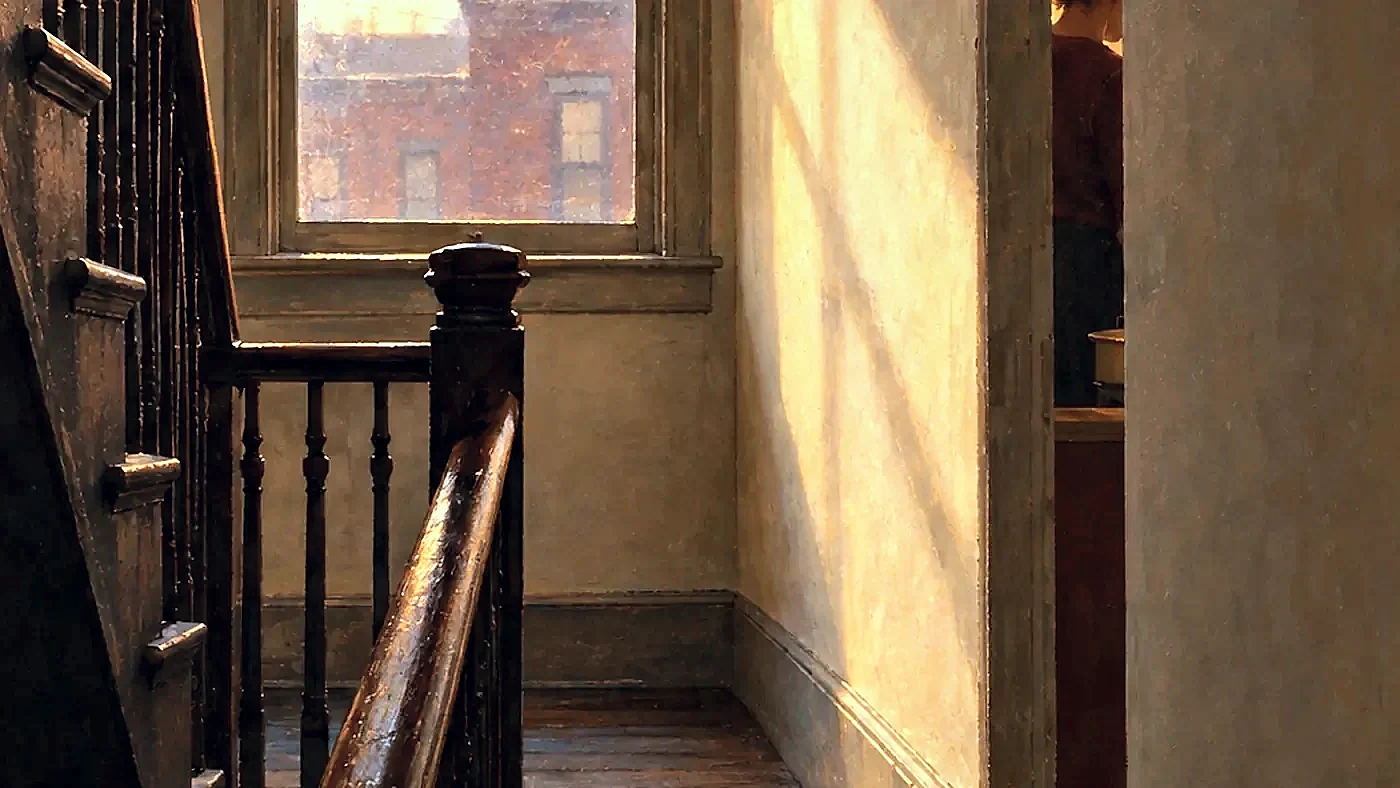
The prose baseline is plain declarative: concrete sensory nouns, short to medium sentences, a matter-of-fact tone that does not editorialize. Against that baseline the sudden lyric lift acquires force. A paragraph of kitchen business—a cup, a window, a smell of onions—will resolve without warning into a cadenced sentence carrying the emotional weight the scene has been withholding.
Transitions go unmarked. Movement between present scene, remembered scene, dream, and reverie tends to occur inside a paragraph, sometimes inside a sentence, without the usual signposts of “I remembered” or “years later.” The reader is carried across the seam and only afterward notices having crossed it. This is not carelessness but the formal expression of a conviction about time: the past is not a separate room to be entered by a door.
Reviewers have praised the descriptive power and emotional directness of this style and have occasionally flagged tonal excess and structural repetition. The second charge is worth answering carefully, because the repetition is deliberate.
III. Vertical Space and Breath
That up-and-down movement is more than atmosphere; in places it is built in. In Molly Bonamici the grandmother’s dying is staged on descending and ascending planes, so that she falls toward the descent of her ending in a hospital elevator while Molly, later in the book, rises from the sea. Ordinary rooms and doorways carry the argument. A lift is a lift, with its indicator lights and its shuddering stop, and it is also the direction a body is taken.
Breath performs the parallel office. The Holy Spirit moves through this work as air, not doctrine: an instruction to breathe in and breathe out, a wind at the characters’ backs, the labored breathing of the dying read as a Pentecost run backward—a spirit going out of a room instead of descending into it. The poems keep the same figure, a speaker seeing his own breath and imagining he sees another’s, turbulence felt as a plane rises through cloud. Nothing in the staging announces the analogy, which is why it survives the scene.
The names carry weight on the same axis. Read through its Irish etymologies, the surname Callaghan casts Gabe as a contender and a would-be priest, an inversion of the figure O’Connor sends to the roadside; the reading is set out in the allusion study for Molly Bonamici. Guides of descent and ascent borrowed from Dante, a Sacred Heart locket, sisters named for the sisters of Lazarus: these are placed without explanation and left to accumulate, in the manner the previous section describes.
IV. Dialogue, Beats, and the Em Dash
Conventional explanatory tags are minimized. “He said sadly” and its relatives interpret a line before the reader has heard it, and the fiction consistently declines that service. Attribution is carried instead by physical action, by positioning in a room, and by the rhythm of the exchange. A beat does three jobs: it identifies the speaker; it embodies the speech among objects and hands and small domestic tasks; and it supplies subtext, since a gesture may qualify or expose what the sentence is trying to manage.
“A Bath” is instructive because it sustains long stretches of two-person dialogue with almost no attribution at all, relying entirely on alternating turns and the reader’s ability to track voice by content. Consider the exchange in which Billy asks his mother about his father:
“Why don’t you ever talk about my father?”
She lit a cigarette and opened the window a crack. I smelled wet leaves before the smoke overpowered the space. “It’s complicated.”
“How complicated could it be?”
Only one line in this sequence receives any attribution at all, and even that attribution (“She lit a cigarette”) is an action beat, not a tag—there is no “she said” anywhere in the passage. The technique intensifies as the scene turns toward its confession: “Did he ever hit you?” my mother said. / “Who?” / “Dad.” / “Why would you ask such a thing?”—four consecutive lines of dialogue carry exactly one attribution between them, and that single “my mother said” exists only because the speaker had briefly changed from the preceding exchange between Billy and Nana; once the two-person volley resumes, tags disappear entirely for the rest of the confession: “Well, did he?” / “A few times. When he was drunk. Men were different back then.” / “Not so different.” Leaving out the tags here is no shortcut. The reader overhears instead of being told, and the prose puts no author between the reader and the confession, mimicking Billy’s own position as a silent witness whose only participation is listening.
Where Mulhern marks a turn, he often uses a physical action performed by the speaker in the same sentence or just before the dialogue, in place of a speech verb. In “Myra Bocca,” a scene of introduction and provocation uses this method: “She turned around and saw that I was reading a sign . . . Both Gabe and Myra laughed. She nodded at the sign, then said, ‘Yes, Molly. I’m Italian just like you.’” Even here, where “said” appears, it follows physical actions (turning, nodding) that help identify the turn. The same story renders a rapid comic exchange through beats: “‘Whadaya say?’ She smiled. ‘Sure. Why not?’ Gabe answered.” The tag “Gabe answered” arrives after context has identified the turn. This beat-first pattern recurs in the examples considered here, placing speech alongside gesture, glance, and posture.
When Mulhern’s characters really interrupt one another, instead of simply taking turns, he reaches for a specific and recognizable device: the em dash breaking a clause mid-word or mid-thought, frequently nested inside a single speaker’s own self-interruption rather than between two speakers. Brian’s extended monologue about Myra in “Myra Bocca” is built almost entirely from this device: “Those stepchildren—great people by the way—wanted nothing more than to settle the trust as it was designed”; “This after he treated her like a queen their whole marriage. Not only did he take care of her, but he took care of all her kids—bought them cars, gave them money, paid for their schooling”; “There’s two other things I want to tell you about what she did, though . . . These things will let you know just how bad she is. She fired an older woman salesclerk . . . And the most heinous thing—is that the right word?” The final example shows the technique at its most self-aware: the speaker interrupts his own accusatory momentum to interrogate his own diction, a hesitation shown entirely by the dash, with no comment from the narrator. The effect across the monologue is of a man whose outrage keeps overtaking his syntax, each dash marking a place where indignation outpaces the sentence’s original plan.
Interruption and withholding are, in this fiction, a single phenomenon, because Mulhern frequently uses the identical toolkit—action beat, missing tag, clipped line—to mark not an interruption but a refusal to answer. In “A Bath,” Nana’s evasions about her late husband’s violence are rendered with exactly the same spareness as the story’s ordinary small talk, so the reader has to notice the withholding from its brevity alone:
“Did he ever hit you?” my mother said.
“Who?”
“Dad.”
“Why would you ask such a thing?”
Nana’s “Who?” is a stall dressed up as a one-word answer, and the prose does not explain it—no “she said, evading the question”—leaving the reader to infer evasion purely from the mismatch between a simple question and a needlessly obtuse response. The technique recurs in “Myra Bocca” when Molly deflects a direct personal question with a bare statement and no explanation: “‘Why aren’t you married?’ ‘Because I don’t want to be,’ I said. ‘Men are a pain in the ass.’” The clipped answer forecloses further inquiry by its very brevity; Mulhern lets the short line close the door by itself, without narration describing Molly’s tone or intent.
The third element is the em dash, used for self-interruption, abandonment, and evasion—for speech cut off before it becomes fully intelligible. Accusation, grief, restraint, or a decision not to expose the truth: the force of such a line remains unsettled, and the reader supplies the pressure from the circumstances of the scene.
Tag omission, action-beat attribution, dash-driven self-interruption, and clipped withholding all reduce explanatory mediation between the reader and spoken exchange. Where a more conventional prose stylist might use “she said hesitantly” or “he interrupted, flustered,” these examples rely on syntax—the presence or absence of a tag, the placement of a dash, the length of a line—to carry emotional information that adverbs and narratorial commentary might otherwise supply. The result can make dialogue feel overheard, with the mechanics of a sentence helping readers infer who has been cut off, who has evaded, or who has momentarily lost control of their syntax.
V. What the Style Asks of a Reader
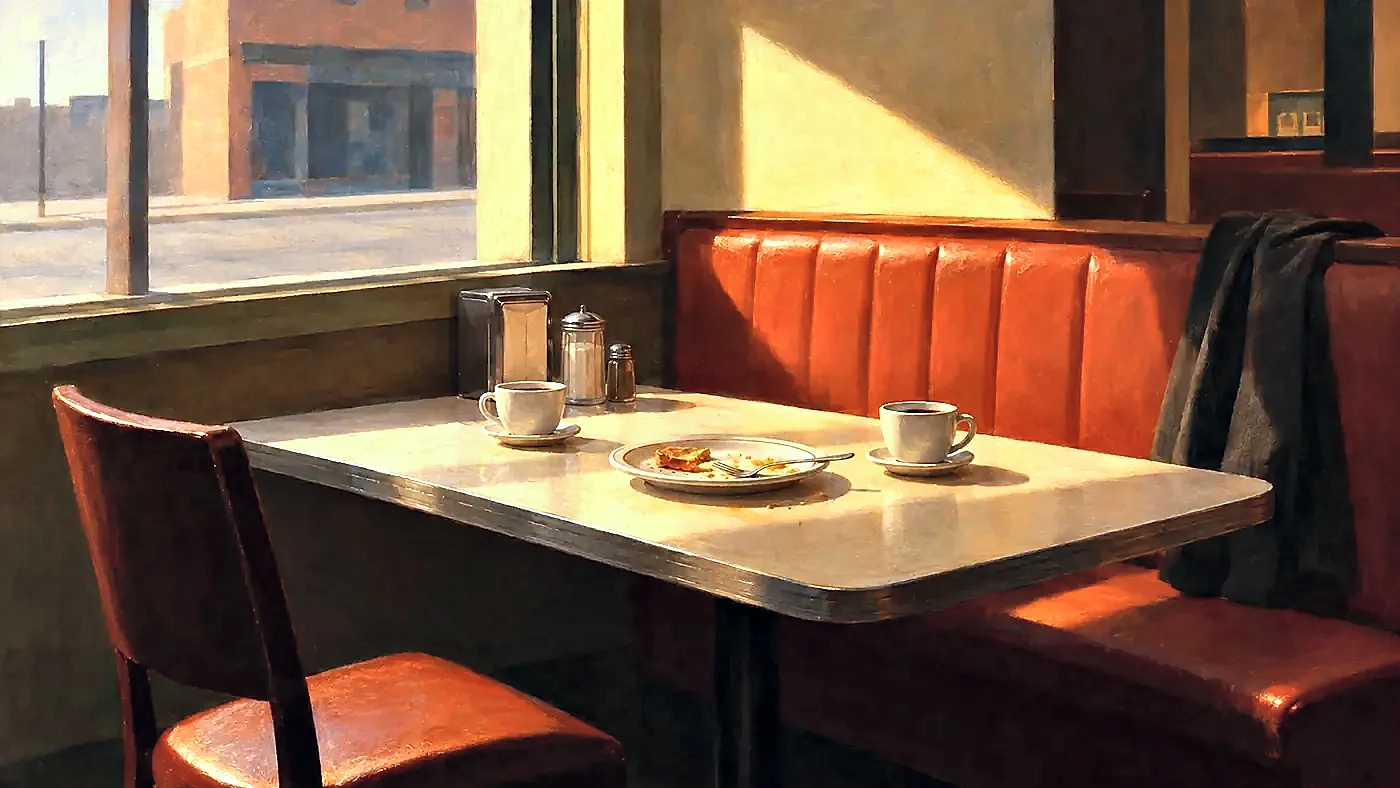
Taken together, these techniques constitute a single discipline: the withholding of immediate interpretation, and the trust that concrete detail will disclose its significance in its own time. The child’s uncorrected perception, the unsignposted transition, the untagged line of speech, the interrupted sentence, the unwithdrawn literal object—each is a refusal to explain.

What is asked of the reader is not decoding but attention. The stories are written on the assumption that a person can be shown a kitchen, a hand, a pause, and a slant of light, and be trusted to understand what has happened in that house. That assumption is itself a kind of mercy, and it is the most consistent moral gesture in the work.
Appendix: Notes for Writers
The techniques described above are teachable, and they are used in workshop for that reason. What follows sets them out as working practice. They are not rules; they are the questions the passages quoted here appear to have been asked.
- Keep “said” when a tag is genuinely invisible and the exchange needs speed. Delete the adverb that follows it, and let the line carry its own weather.
- Give a speaker one small physical task and let attribution fall out of it. Prefer an object already established in the room over one imported for the purpose.
- Allow a gesture to contradict the sentence it accompanies, and leave the contradiction unexplained. The discrepancy is the information.
- Reserve the em dash for speech the speaker abandons, not for speech the writer abandons. The break should read as a decision made inside the scene.
- Let brevity perform refusal. A one-word answer to a direct question needs no gloss; the mismatch between question and answer does the work that “she said, evading” would otherwise do.
- Test each beat by deletion. If the paragraph loses only decoration, cut it. If it loses attribution, embodiment, or subtext, it has earned its place.
- Read the exchange aloud with every tag removed. If the speakers remain distinguishable by diction alone, the dialogue is carrying its own weight.
—Silver Current Press
Works Quoted
Dialogue is quoted from “A Bath” and “Myra Bocca,” both collected in All We Ever Needed (Silver Current Press, 2026). The vertical staging of the grandmother’s death and Molly’s rising from the sea, and the reading of breath as the Holy Spirit—including the dying breath as an inverted Pentecost and the corresponding lines in the Crossings poems “Leaves” and “Turbulence”—are author-confirmed readings, offered here as interpretation and not as quotation.
Related essays on this site: “Altogether Beautiful” traces the doubling word by word in “Assumptions”; “What Is Laid Down Is Taken Up” makes the argument for recurrence; “The Confessor Archetype” reads the confession scene of “A Bath” for what it withholds; and “The Voices That Would Not Be Tidied” reads the dialect.
Prefer to read or teach this off-screen? The full essay—abstract, notes, and works quoted—is available as a typeset PDF.
Quotations have been checked word for word against the published texts. Where a connection is inferred, the essay says so.